966
966




- 18 April, 2025
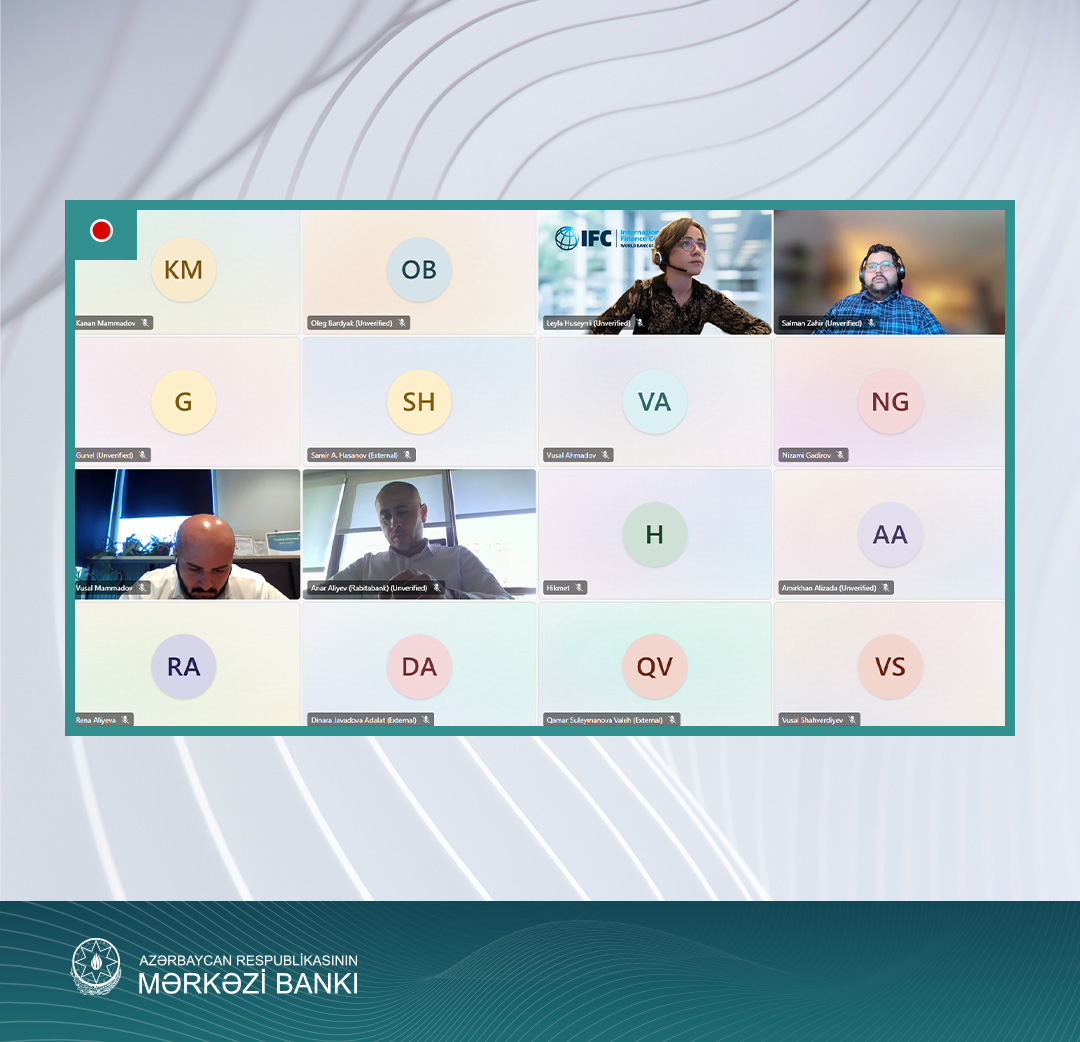
Central Bank conducts practical Green Taxonomy training for banks The Central Bank, together with the World Bank, organized practical training sessions entitled "Implementing Green Taxonomy in Azerbaijan" for representatives of the country's commercial banks. The three-day training program aimed to increase the sustainability potential and adopt the principles of the Taxonomy in the country's banking sector, as well as to support the application of these criteria in business processes. The training provided participants with key information on national and international green taxonomy frameworks, the Central Bank's Sustainable Finance Roadmap and its implementation. The training was also an opportunity for participants to explore the application of taxonomy criteria in real funding decisions. This training became one of the Central Bank's key initiatives to increase the sector's technical capacity in the field of sustainability, serving as an important information platform.
- 3 February, 2025
Green Banking webinar 2025 event held Rustam Tahirov, Department Director at the Central Bank, participated in the first session of the ‘Green Banking Webinar 2025’ series, organized by the IFC and the IFC Green Banking Academy and delivered a presentation on the key outcomes of COP29 and the critical role of the interconnectedness of the global financial system in expanding climate finance.
R. Tahirov stated that one of the main achievements of COP29 was active discussions and the formation of initiatives aimed at strengthening the interconnectedness of the global financial system and increasing sustainable investment flows. He highlighted that in cooperation with international partners the Central Bank has taken the lead in developing the ‘Roadmap for the development of interconnectivity and comparability of sustainable finance taxonomies’ as part of COP29 and played a significant role in these initiatives
For the full information about the webinar please go to:https://lnkd.in/ei4t9b5x
- 5 September 2024
Central Bank organizes webinar on Climate Assessment for Financial Institutions The Central Bank has organized a webinar regarding the Climate Assessment for Financial Institutions (CAFI) of the International Finance Corporation (IFC).
The webinar highlighted climate risk assessment in financial institutions on one of the strategic priorities of the Sustainable Finance Roadmap: ‘Capacity building in sustainable finance’.
Note that, CAFI enables financial institutions to monitor green investments in their portfolios, assess the environmental impact of these investments and develop impact reports.
- 30 August, 2024
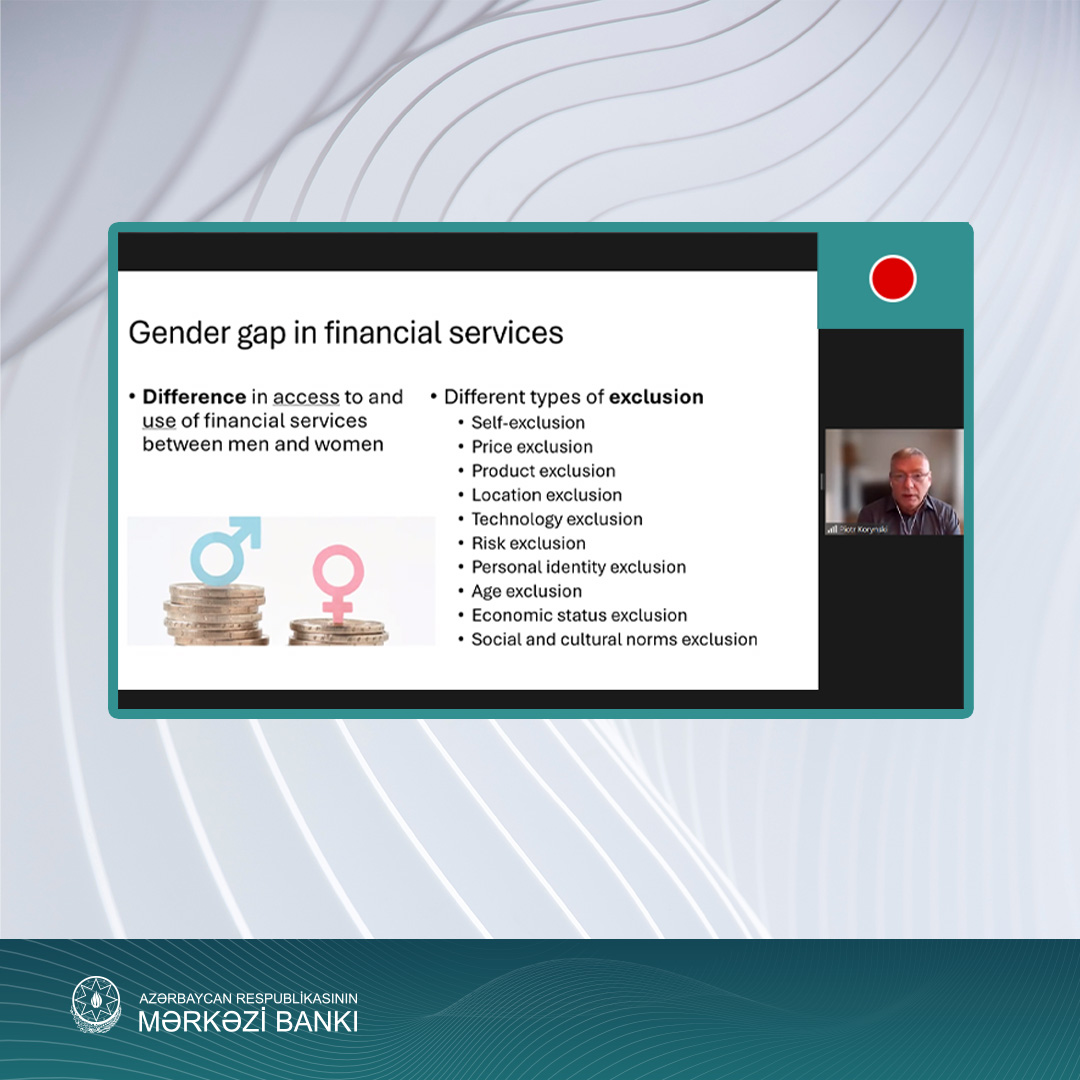
An online meeting was held to promote gender finance An online meeting was held with representatives of banks and NBCIs on 30 August to promote gender finance in financial institutions.An international expert emphasized the importance of gender finance and the need for financial institutions to develop new products in this area.
The participants also discussed forming a policy to increase women's participation in various sectors of financial institutions and reviewed relevant statistics from our country.
- 16 August, 2024
‘Guidelines on Environmental Risk Management for Banks’ presented to bank representatives The Central Bank of the Republic of Azerbaijan held an online presentation of the ‘Guidelines on Environmental Risk Management for Banks’ for representatives of banks.
During the presentation, the discussions focused on the framework for managing climate and other environmental risks in banks, including internal policies and procedures. Key topics included the application of recommendations for risk identification, evaluation, regulation, and monitoring.
The interactive meeting allowed for questions from bank representatives and the submission of relevant proposals. Participants also discussed next steps to enhance climate risk management in banks and improve access to climate risk information.
- 24 July, 2024
‘Guidelines on Environmental Risk Management for Banks’ The Central Bank continues efforts to implement measures outlined in the ‘Sustainable Finance Roadmap (2023-2026)’ aimed at transforming the financial sector towards sustainable finance. One of the next initiatives involves integrating climate and other environmental risks into banks’ risk management systems. To this end, the Management Board of the Central Bank of the Republic of Azerbaijan decided to approve the ‘Guidelines on Environmental Risk Management for Banks’ on 11 July 2024.
The Guidelines are based on international standards, best practices, and the specifics of the domestic banking sector. The main objective of the Guidelines is to ensure that climate and environmental risks are integrated into banks’ risk management systems and enhance sustainability against these risks.
As a recommendatory framework, the Guidelines will support the Central Bank’s policy of transitioning to sustainable finance.
The Guidelines on environmental risk management for banks- 06 May, 2024
2023 Sustainable Finance Report published The annual Sustainable Finance Report encompasses the efforts of the Central Bank in 2023 on transitioning the financial sector to a sustainable finance model. Guided by best practices the report has been developed to ensure transparency in the finance industry.
With this report the Central Bank seeks to keep financial market participants, stakeholders, and the broad public informed about activities and planned actions related to the integration of sustainable finance into financial sector growth priorities and the implementation of the ‘Roadmap for Sustainable Finance: 2023-2026’.
The inaugural Sustainable Finance Report will be made public periodically.
- 06 April 2024
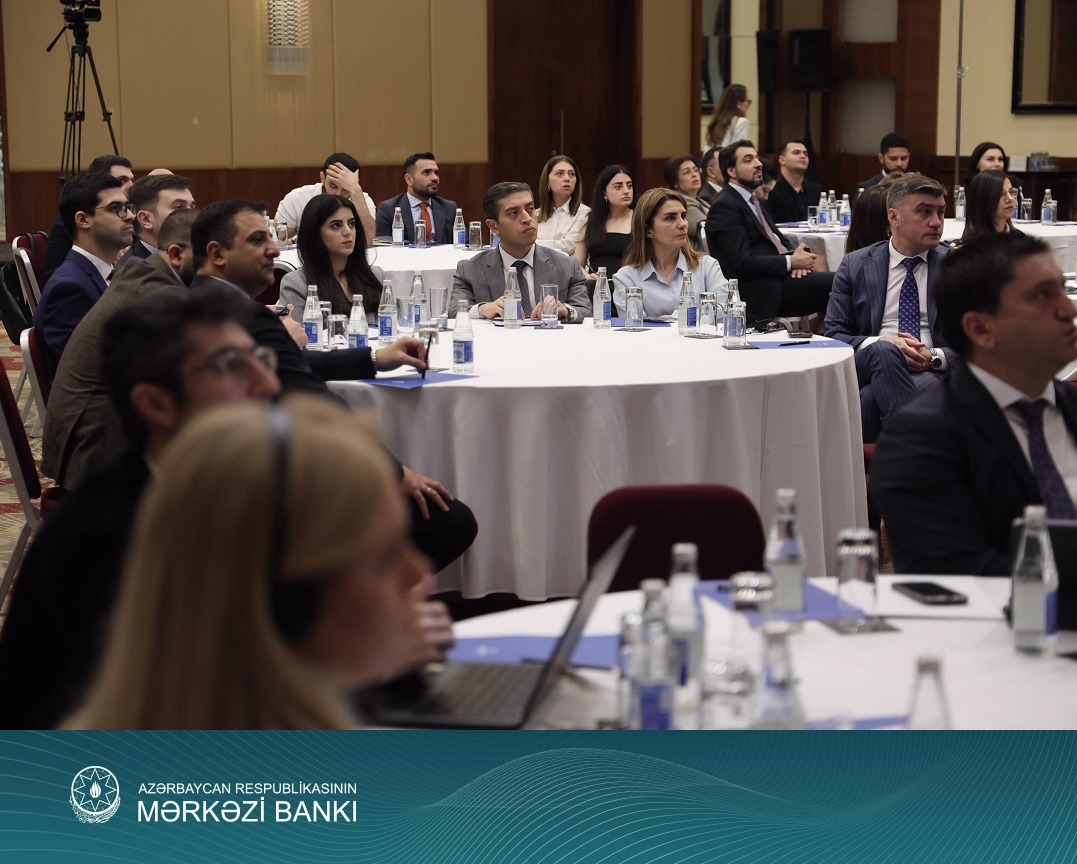
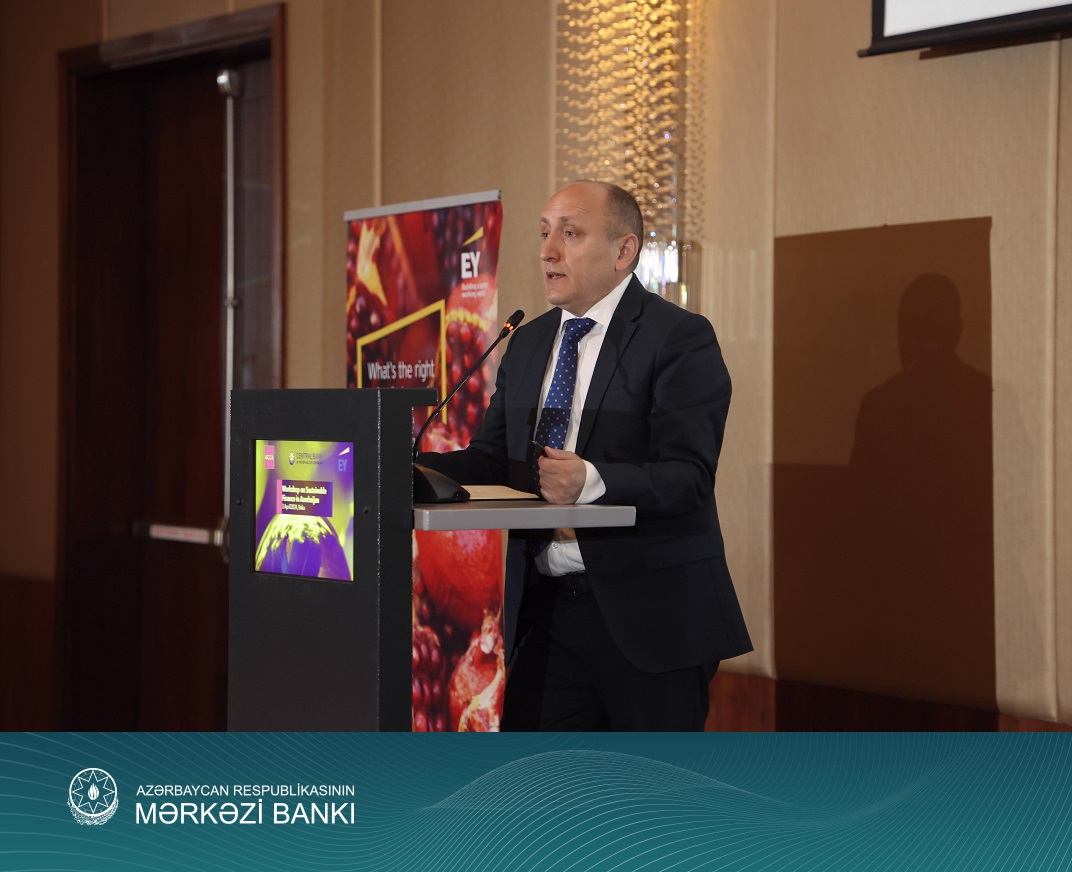
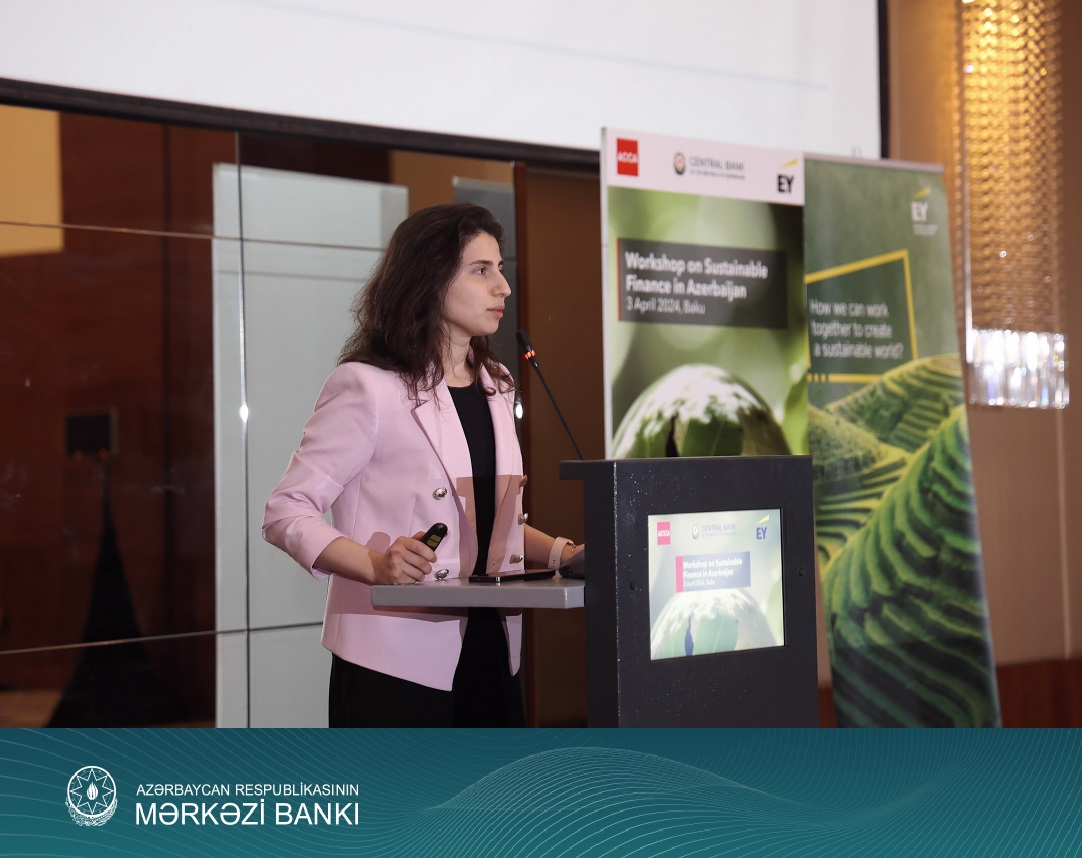
Event titled ‘Sustainable finance in Azerbaijan’ held An event titled ‘Sustainable Finance in Azerbaijan’ was held in partnership between the Central Bank and the EY, organized by the ACCA (Association of Chartered Certified Accountants). The event, attended by more than 100 representatives from the public and private sectors, embassies, and international institutions, emphasized Azerbaijan's sustainability initiatives, targets, and priorities related to the socio-economic development strategy.
The event participants also discussed the summary of new standards by the International Sustainability Standards Board (ISSB) and the experience of the Turkish Public Oversight, Accounting and Auditing Standards Authority in applying sustainability standards.
Rustam Tahirov, Director of the Financial Stability Department of the Central Bank, briefed the guests on main directions of sustainable and green finance agenda and noted that Environmental, Social and Governance risks are critical for the stability of financial institutions and emphasized the importance of strengthening institutional capacity and cooperation to achieve sustainable development goals. Additionally, the event brought attention to the Sustainable Finance Principles developed by the Central Bank.
- 02 April 2024
Sustainable Finance Principles The transformation of the financial sector to sustainable finance is one of the core strategic targets of the Central Bank. Accordingly, efforts continue to implement the Roadmap for Sustainable Finance: 2023-2026 Roadmap. One of the related initiatives was the development of the ‘Sustainable Finance Principles’.
The principles document covers the integration of Environmental, Social and Governance (ESG) factors in financial institutions in i) business strategy formulation, (ii) corporate governance, (iii) risk management and (iv) information disclosure. The principle of sustainable finance for each direction is formed by a part reflecting its importance, expectations addressing its application in detail, and practical questions. In general, the principles aim to instill best practices and exemplary market conduct in financial institutions (banks, non-bank credit institutions, investment companies, insurance companies) on climate change and ESG factors risk management and assessment of opportunities and appropriate consideration in their operations.
The principles are recommendatory and support the CBA’s policy on transitioning to sustainable finance.
- 08 December, 2023
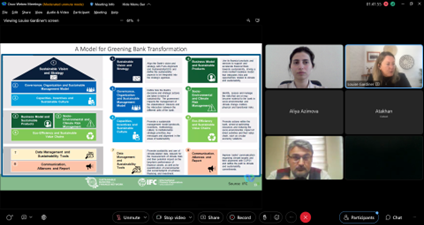
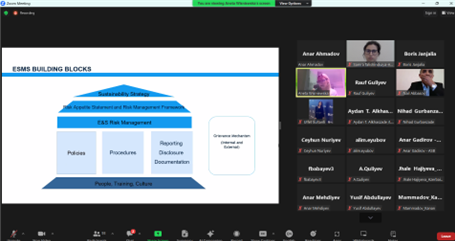
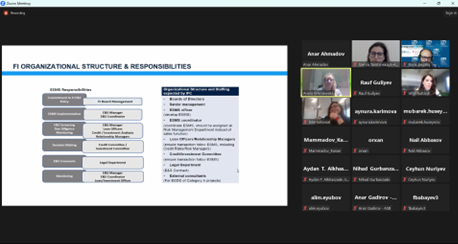
The Central Bank, together with the IFC and the SBFN, organized a training session called "ESG risk management" Within the framework of its sustainable finance mission, the Central Bank together with the IFC and the SBFN organized a virtual training for financial market institutions and associations on December 08, 2023 called "ESG risk management". The ESG risk management, training has focused on environmental and social management system (ESMS) and the roles and responsibilities, corporate management aspects covered, the case study was done as well. Approximately 100 financial sector representatives participated in the training.
Training was held within the first strategic priority of the Roadmap "1.4. Initiating capacity development and knowledge sharing events for financial intermediaries engaging with relevant financial sector associations".
- 28 November, 2023
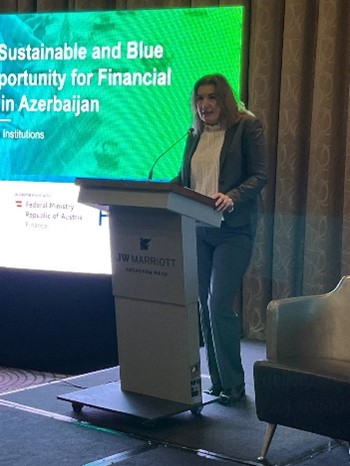
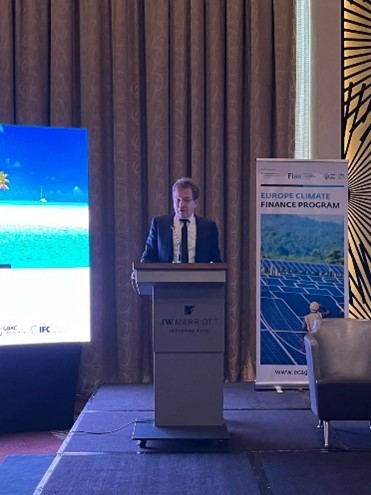
The Central Bank participated in "Blue horizons: possibilities of applying blue financial instruments in Azerbaijan" seminar held with the support of IFC "Blue Horizons: Possibilities of applying blue financial instruments in Azerbaijan" was organized by the Azerbaijan Banks Association and supported by the European Sustainable Finance Project of the International Finance Corporation.
Ivana Fernandes Duarte, regional manager for the South Caucasus, Europe and experts of the IFC and representatives of the Central Bank participated in the seminar.
The representatives of the Central Bank presented information on the implementation of the "Sustainable Finance Roadmap: 2023-2026", the prospects of applying blue financial instruments in our country and answered the questions of the seminar participants.
- 3 October, 2023
The Central Bank has announced results on “Sustainable Finance Survey” "Sustainable Finance Survey" has been conducted among banks, insurance companies and investment companies in June-July of 2023.
The purpose of the survey was to measure the awareness of financial institutions on the principles of sustainable finance and ESG principles, to stocktake the measures carried out in this direction and to collect preliminary statistic data.
The analysis of the survey results showed that financial institutions expect the effects of ESG risks to be low in the short term (73%). However in the medium and long term they expect that the effects will gradually migrate to the medium and high risk zone (~60%). Although 46% of financial institutions (mostly banks) noted that ESG risks may affect their operations, 44% of them stated that relevant analysis was not conducted in this direction. The main expectations of financial institutions regarding the transition to sustainable finance and the application of ESG principles were the raising awareness and information measures, the preparation of legal and regulatory framework, determining reporting and disclosure requirements.
The survey was carried out within the framework of the implementation of the "Roadmap for Sustainable Finance: 2023-2026".
You can get acquainted with the report on the survey results from the link below.
- 22 September, 2023
The Central Bank has made a presentation about Sustainable finance at AmCham Committee meeting The Central Bank has made a presentation about Sustainable finance Roadmap at AmCham Banking, Finance & Insurance and Sustainable Development & Corporate Impact Committees’ joint meeting. Presentation has covered Central Bank’s sustainable finance agenda, Action Plan of Sustainable Finance Roadmap and ongoing initiatives. Meeting covered around 60 participants from private sector.
- 12 September, 2023
Integration of ESG factors into "Corporate governance standards in banks" Within the framework of the implementation strategy of sustainable finance of the Central Bank, ESG factors have been integrated into the strategy formation and risk management in the "Corporate governance standards in banks" approved by the Decision No. 41/1 of the Board of Directors dated August 28, 2023.
According to the standards, in order to ensure its long-term stability, banks need to consider ESG factors that currently pose or may pose a significant impact on its operations and business strategy strategy. Moreover, financial and non-financial risks, which may arise from ESG factors, should be taken into account in the risk management prosess.
More detailed and comprehensive guidance documents in this direction will be presented to financial institutions in the near future.
- 26 June, 2023.
"Sustainable Finance Survey" has been conducted in financial institutions Within the implementation of the "Sustainable Finance Roadmap: 2023-2026" the "Sustainable Finance Survey" was carried out in June-July of 2023.
The purpose of the survey was to measure the awareness of financial institutions (banks, insurance companies and investment companies) about ESG principles, to stocktake the measures taken relevant to sustainabel finance, as well as those planned to be taken, and to collect preliminary indicative sustainable finance data. The survey will be periodic in nature and relevant adjustments and improvements will be made according to sustainable finance developments in the financial markets.
The survey results analysis will be published on the official website of the Central Bank.
- 07 June, 2023
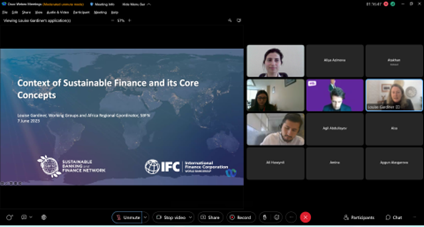
Organization of a virtual training of "Fundamentals of Sustainable Finance" jointly with the IFC and the SBFN Within the framework of the sustainable finance mission of the Central Bank, together with the International Finance Corporation and the Sustainable Banking and Finance Network, a virtual training/webinar of "Fundamentals of Sustainable Finance" has been organized for financial market institutions and associations on June 7, 2023. Nearly 100 financial sector representatives participated in the webinar.
In the webinar, the "Roadmap for Sustainable Finance: 2023-2026”, the main concepts of sustainable finance, opportunities for sustainable finance, the importance of ESG (environmental, social and governance) principles for sustainable finance have been presented.
The event was carried out within the first pillar, Raising awareness and capacity building in sustainable finance, of the "Roadmap for Sustainable Finance: 2023-2026".
- 22 February, 2023
The Central Bank of Azerbaijan has adopted the Sustainable Finance Roadmap With the decision of the Management Board of the Central Bank of the Republic of Azerbaijan, the Sustainable Finance Roadmap covering the years 2023-2026 was approved on February 15, 2023, in order to transform the financial sector into sustainable finance.
The purpose of the Roadmap is to ensure the resilience of financial institutions against risks arising from climate changes and other ESG factors, as well as to realize the opportunities arising from the transition to a sustainable economy. The Roadmap was developed taking into account international practice and integration of climate change and ESG principles into the regulation and supervision of the financial sector, including the strategic decision-making and risk management processes of financial institutions.
In general, the implementation of the Roadmap will serve the establishment of sustainable financial sector in the country.