
 966
966




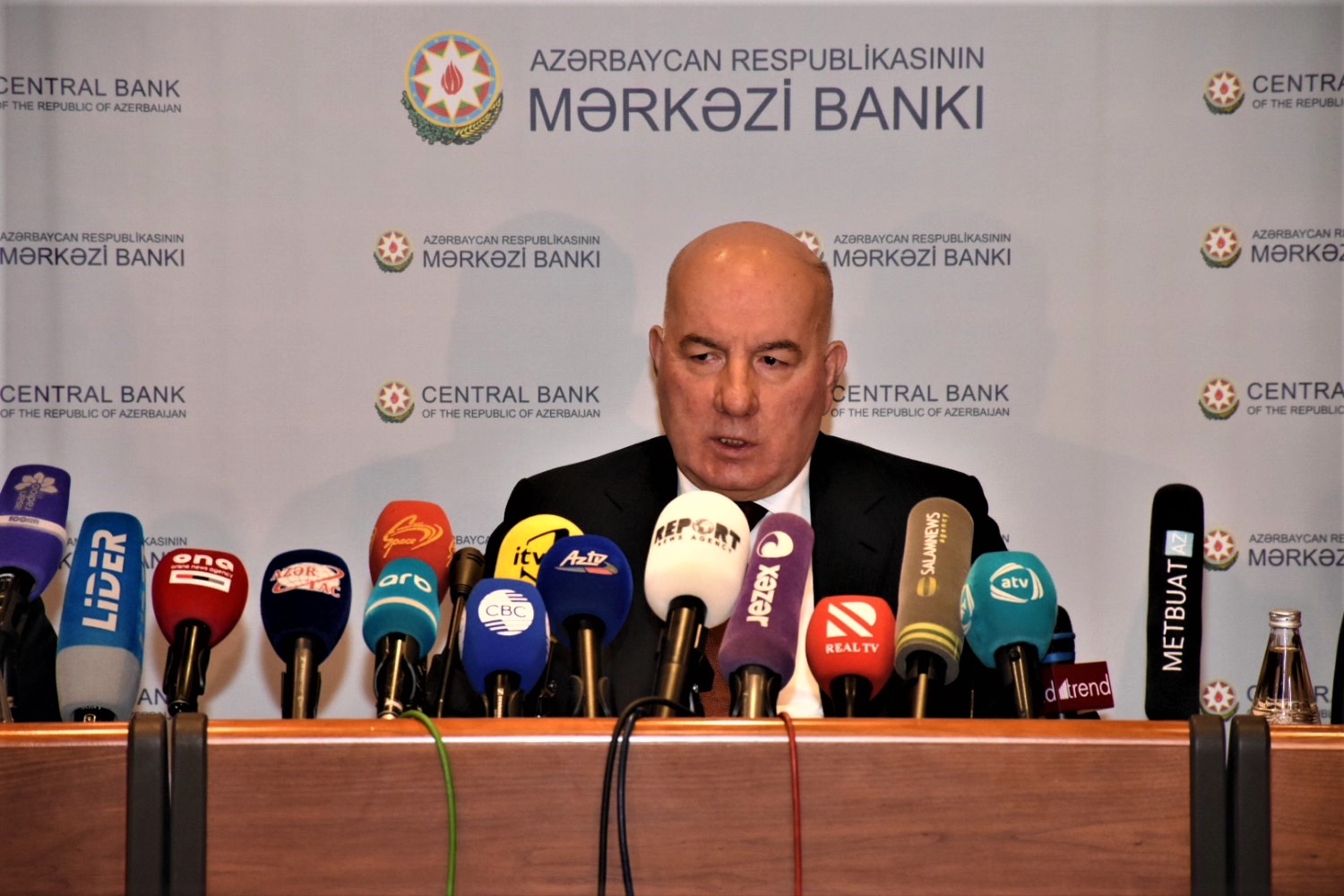
26 April 2019, Baku: The Management Board of the Central Bank of the Republic of Azerbaijan decided to reduce the refinancing rate to 8.75% from 9%. The ceiling of the interest rate corridor was set at 10.75%, and the floor at 6.75% (±2% symmetric range). The decision is taking effect on 26 April 2019.
This decision was taken in view of the fact that the inflation rate is within the target (4±2%), inflation expectations are stable and the external environment is favorable. Inflation being close to the bottom of the target band allows to continue normalization of the monetary policy.
Inflation. In March 2019 12-month inflation was 2.5%, close to the band bottom.
Annual inflation is mainly driven by price dynamics of paid services (3.7%), accordingly, this factor accounts for about half of the rise in annual inflation. The dynamics of food (2.3%) and non-food prices (1.3%) lags behind that of overall inflation.
Despite wider aggregate demand and a rising effect of a number of non-monetary factors on prices, the dynamics of bilateral and nominal effective exchange rate, and the monetary condition contributed to inflation being maintained within the target.
Inflation expectations. Amid actual low inflation, expectations remain stable. According to the real sector monitoring by the Central Bank, price expectations dropped in non-oil processing and construction over the recent month. The March survey among households suggests that the number of respondents who expect higher inflation is 3.2%.
Recent forecasts display that inflation will remain within the target over the remaining period of 2019. International financial organizations in their recent releases also forecast low one-digit inflation in Azerbaijan in 2019.
External condition. Positive dynamics continues in the external sector. In QI, 2019 external trade surplus amounted to $1.3 B due to 34% rise in exports, including 17% rise in non-oil exports. Net non-oil import increased by 9.7%, if to ignore monetary gold import.
The price conjuncture in global commodity markets is favorable for Azerbaijan. The oil price has increased by 34% since the early year to over $70. Oil prices made up $65 on average.
In QI strategic reserves increased by $1.9 B to $46.7 B.
According to the UN Food and Agriculture Organization, while global food prices increased by 3.4% in January - March, they are y/y 3.6% below. In March prices for meat and dairy products increased compared to the previous month, while the price for wheat, vegetable oil and sugar cheapened.
As of the yearend current account of the balance of payments is expected to be in considerable surplus. Central Bank’s related forecasts correlate with those of international organizations.
The country’s internal foreign exchange balance maintained equilibrium in QI on the backdrop of balance of payments surplus, demand was nearly close to supply at currency auctions of the Central Bank.
Economic activity. The economic growth rate has been rising since the early year. In QI 2019 real economic growth y/y made up 3%. Non-oil economic growth stood at 1.7%, driven by trade. The non-oil industry posted 16.1%, agriculture 3.6% growth.
The business confidence index based upon real sector monitoring by the Central Bank has increased in trade and construction services over recent 3 months.
Fiscal stimuli to be injected to the economy as a social reform package are expected to push economic activity by widening domestic demand over the remaining part of the year. The pre-condition for wider consumer demand not to trigger excess inflationary pressure is high domestic production.
Inflation risks. No significant change has occurred in inflation’s risk balance since the recent meeting of the Management Board dedicated to the monetary policy condition.
Stabilizing factors include anti-inflationary monetary condition, sustained exchange rate amid the balance of payments surplus and inflation expectations amplified on an actual inflation rate.
However, external and internal risks are still on air. External factors include possible translation of slowed down global economic growth to oil prices, ongoing price hike in global food markets, inflation and exchange rate volatility related uncertainties in trade partners. The IMF in its April release revised down global economic growth forecast for 2019 compared to the January release.
Internal factors mainly include pass-through of fiscal stimuli to the consumer market and the monetary sector, supply shocks across particular agricultural products and transition of recovered lending activity to lending expansion. In the current year and for the medium term a stable fiscal policy remains to be one of the critical conditions for price stability and exchange rate sustainability.
Monetary condition. According to estimations by the Central Bank, ongoing normalization of the monetary policy will have an upward effect on maintaining the balance between underpinning economic growth and safeguarding macroeconomic stability.
Money supply and the liquidity position of the banking system is driven by the state budget surplus and demand of the real sector for loans. In QI credit investments increased by 0.3%, loans to households increased by 2.1%. Although lending posts growth, the liquidity position of the banking system still has excess surplus.
De-dollarization continues. Dollarization of savings of individuals decreased to 60.5%, and to 58.7% on resident individuals.
Next disclosure by the Management Board of the Central Bank on the interest rate corridor parameters will go public on 7 June 2019.
26.04.2019