
 966
966




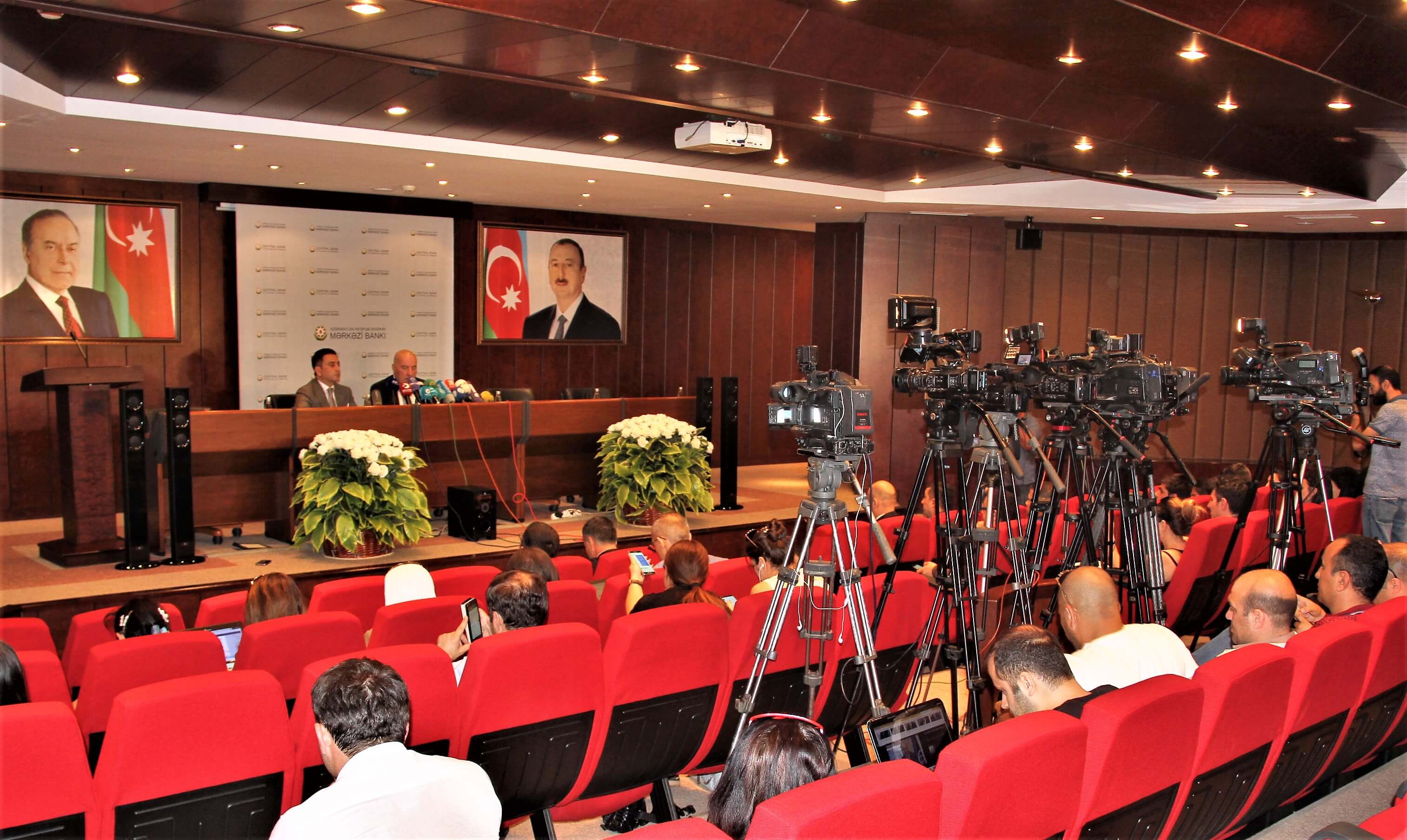
26 July 2019, Baku: The Management Board of the Central Bank of the Republic of Azerbaijan decided to reduce the refinancing rate to 8.25% from 8.5%. The ceiling of the interest rate corridor was set at 10.25%, and the floor at 6.25% (±2% symmetric range.
According to updated forecasts, as of the end of the current year inflation is expected to remain within the target band (4±2%), however it is expected to be at the upper band of the target range as of the end-year due to expansion of domestic demand.
Monetary policy decisions for the remaining part of the year will be taken in light of realization of inflation forecast, potential for formation of a new trend, and assessment of the internal and external risks balance.
Inflation. Since the last meeting of the Management Board dedicated to the monetary policy deflation, related to seasonal factors, was recorded. Overall level of prices dropped by 0.5% in June. Inflation was below the center of the 12-month target band (2.9%).
High food prices (4.3%) are critical in the inflation rate. Main factors that affect food inflation are price hikes of vegetables and excisable goods. Annual price rise for non-food (1.3%) and services (2.3%) was below the center of the inflation target band.
On the backdrop of expanded domestic demand anti-inflationary monetary condition, as well as dynamics of bilateral and multilateral exchange rates slow down inflationary pressures.
Inflation expectations. According to the real sector monitoring (RSM), in June, price expectations dropped in trade and construction compared to the previous month, and rose in non-oil processing and services. The survey conducted among households in June suggests that the number of respondents, who expect higher inflation, is falling (2.3%). However, analyses show that inflation expectations are fragile and asymmetric.
As of the end-2019 inflation is expected to remain within the band (4±2%), and be at the upper band of the range as of the end-year due to expansion of domestic demand.
External condition. The external economic position of the country keeps improving. Foreign trade surplus is increasing. In January-June export of goods increased by 15.2%, non-oil export increased by 13.5%, surpassing non-oil import growth (11.6%), if exclude import of monetary gold. Average oil price was over $66 over the past period of the year ($72 in 2018).
Amid balance of payments surplus strategic foreign exchange reserves of the country have increased by 9.7% ($4.3 B) to $49.1 B since the early year.
International organizations revised global economic growth outlook, and outlook for a number of our trade partners down. Global uncertainties and trade conflicts remain.
Global food prices have increased by 7.1%, including 8.4% on meat and products, 17.2% on dairy products (Source: UN Food and Agriculture Organization) since early year.
External monetary condition continues softening, having positive influence on macroeconomic stability in main foreign trade partners among developing countries.
Economic activity. Economic growth is supported by external demand, expanded consumption and non-oil investments. In the first half of 2019 real GDP y/y increased by 2.4%. The non-oil sector grew by 3.2%, stemming from the trade sector. Non-oil investments increased by 5.1% in the first half of the year. High growth rate of household income is accompanied by rising growth rate of retail trade and paid services with certain lags. The business confidence index based upon the RSM increased in trade and services over the recent month.
Inflation risks. External factors are considerable in inflation risk balance. Geopolitical and geo-economic factors may trigger volatility in global commodity markets and strengthen exchange rate and inflation expectations.
Analysis by the Central Bank of households’ income and consumer demand suggests that the effect of these factors on inflation may slightly be more active in the second half of the year. Currently, higher-than-demand-supply in the forex market, in particular through the fiscal channel puts ongoing pressure on strengthening of the national currency.
Neutralization of inflation risks highly depends on effective implementation of the adopted macroeconomic framework – fiscal discipline based on budget rules, as well as flexible and independent monetary policy oriented towards price stability.
Monetary condition. The monetary condition has been smoothing since the last meeting of the Management Board dedicated to the monetary policy.
Money base in manat has increased by 7% since early year. Rising growth rate of money supply mainly relates to activated expenditures from the treasury account because of socio-fiscal stimuli.
In addition to changes by the Central Bank to interest rate corridor parameters, the Deposit Insurance Fund decreased the interest rate cap on insured deposits from July 1, which is expected to have a decreasing effect on credit rates by reducing cost of bank resources.
Upcoming decisions on the parameters of the interest rate corridor will be adequate to attaining inflation target, changes in external and domestic risk balances, in particular to transmission of fiscal stimuli to prices. If inflation is within the target and forecast, the trend of moving the monetary condition to neutrality may be continued.
The decision is taking effect on 26 July 2019. Next disclosure by the Management Board of the Central Bank on the interest rate corridor parameters will go public on 13 September 2019, while next press conference will be on October 25 according to the schedule.
26.07.2019