
 966
966




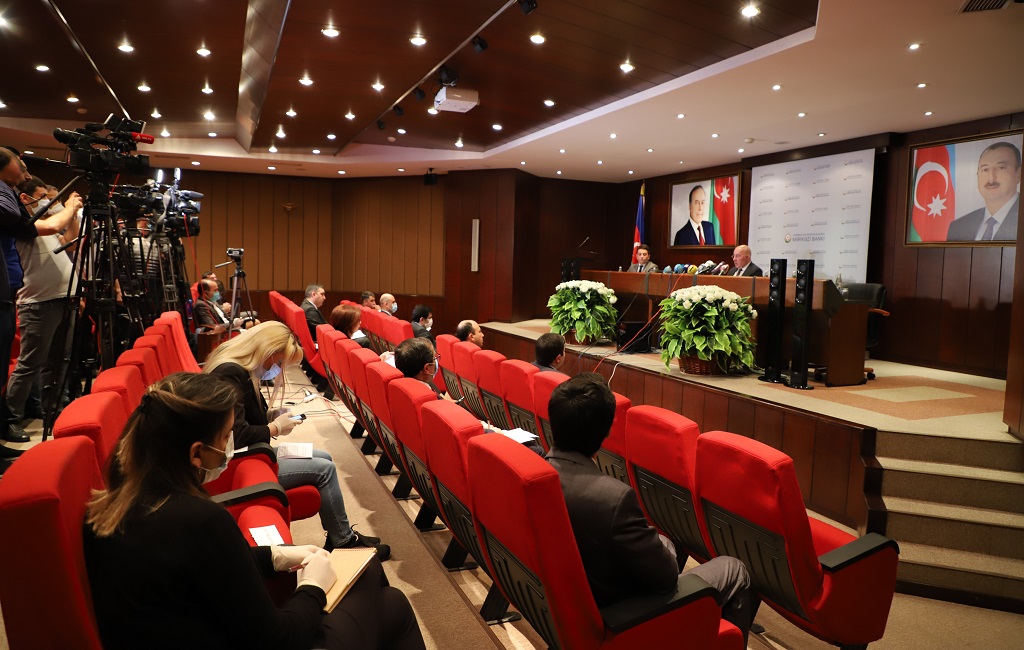
1 may 2020, Baku: The Management Board of the Central Bank of the Republic of Azerbaijan decided to leave the refinancing rate unchanged at 7.25% and the floor unchanged at 6.75%. The ceiling of the interest rate corridor was shifted to 8% from 9%.
Global environment and external sector indicators. Since the last meeting on monetary policy, shrunk global demand and supply, high fluctuations in international commodity and financial markets have been associated with negative effects of the coronavirus pandemic.
Economic activity slumped in leading economic power centers, unemployment is rising greatly. International organizations have considerably revised global economic outlook down for 2020. The IMF forecasts 3% global recession.
Energy markets undergo high fluctuations amid significantly shrunk global demand. Albeit new OPEC++ deal end-April, oil prices kept falling.
Global financial markets, including FX markets of major trading partners continued to fluctuate.
International organizations and individual countries have launched large-scale stimulus programs to support economic activity during the pandemic.
Inflation and inflation expectations. Though slightly increased as expected since the last meeting of the Management Board dedicated to the monetary policy, the annual inflation rate remained below the target band. According to official statistics, annual inflation was 3.3% in March. Over recent 12 months inflation has been 6% on food products, 1.2% on non-food products and 1.2% on services. High food inflation is mainly attributable to short-term rise in demand for food under tightening of the quarantine regime, as well as local increase in production and transportation costs.
According to monitoring of real sector entities, inflation expectations remained unchanged in construction in March vs the previous month, decreased in trade, and increased in the non-oil industry and services. Higher inflation expectations of households is temporary.
Recent forecasts indicate that if current macroeconomic trends linger, inflation will remain within the target band (4±2%) in 2020.
Monetary condition. Surplus in the state budget and actions oriented towards stabilizing the FX market weighed on the monetary condition over the past period. The money market dynamics factor in stability in the FX market.
The April dynamics indicates that the situation in the FX market normalized.
The Central Bank applies monetary policy tools as appropriate to meet liquidity needs of the economy and maintain FX market stability. The Bank has made necessary corrections to the term and interest rate formation of sterilization tools in light of recent trends in the money market.
Interest rates vary across money market segments. They are prone to rising in the interbank money market. Average interest rate in the interbank REPO market increased from 4.5% (March) to 8% (April). Interest rates on new savings and deposits, as well as new loans denominated in manat have undergone no considerable changes over the recent month.
Attractiveness of the assets denominated in the manat for economic agents is being safeguarded amid low inflation. Though dollarization of deposits slightly increased on the last month of Quarter I, the reverse trend is observed in April. Prolongation of the Law on Full Deposit Insurance will both protect the deposit base of banks and support de-dollarization.
The main source of loan portfolio growth is business loans. Consumer loans tend to decline, their share in the loan portfolio is declining.
Actions taken by the Central Bank to support the population and businesses affected by the pandemic allow easing lending terms and conditions within the frames of maintaining financial stability.
Economic activity. As in most countries, the coronavirus pandemic has a downward effect on economic activity. The real sector monitoring by the Central Bank indicates that, positive dynamics of economic activity indicators in the non-oil industry, construction, trade and services in January-February was replaced by drop from March onward, and the trade activity plunged.
Whereas economic activity was 2.8% over 2 months of 2020, it decreased to 1.1% in Quarter I due to the coronavirus. Economic activity was 6.7% in the non-oil industry in the first 2 months and 3.5% on results of Quarter I.
The Government's economic support package (over 4% of GDP) and synchronized macro-prudential measures should help slow down the contraction in demand and protect employment.
Inflation risks. Uncertainties related to changes in the balance of risks remain high. Global economic activity and the conjuncture in global oil markets mainly affect through the channels like export revenues and expectations. On the other hand, restriction of the import of goods and services due to social isolation on a global scale rebalances the balance of payments. Flexible macroeconomic maneuver space in line with new realities, foreign exchange reserves that considerably exceed sufficiency norms and economic aid package under realization help diminish negative effects of the pandemic. Drop of macroeconomic risks will depend on the recovery of the global economy after easing the quarantine regime and reasonable stabilization of global oil prices.
Processes expected both externally and internally over the remaining part of the year require an optimum balance between the economic activity and employment target and safeguarding macroeconomic stability and its key anchor, exchange rate stability, when taking next decisions on the parameters of the interest rate corridor. Under these circumstances, the Central Bank will monitor developments in the global environment and domestic financial markets and the state of achieving the inflation target.
The decision takes effect on 1 May 2020. The next decision of the Management Board of the Central Bank on the interest rate corridor parameters will be announced on 19 June 2020.
01.05.2020